SDXD - San Diego Experience Design
Scaling a Design Community Through UX Research Methodologies
Role
Head of User Experience & Board Member
Duration
June 2020 - June 2022
Impact
2x membership growth (2,500 → 5,000)
Overview
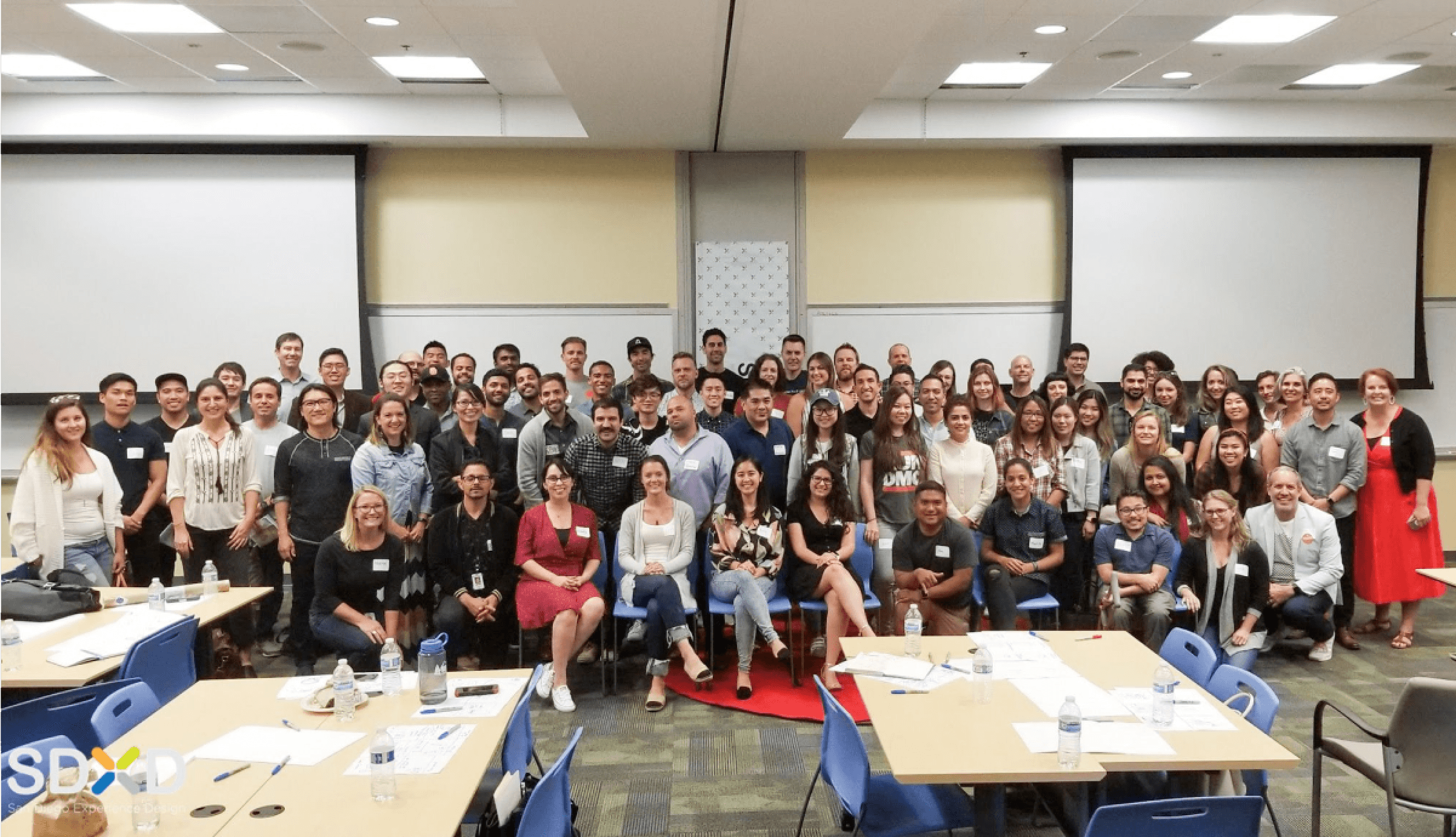
SDXD (San Diego Experience Design) is one of the largest design communities in the San Diego area, bringing together UX designers, researchers, product managers, and design enthusiasts. As Head of User Experience and a Board Member, I applied UX research methodologies to understand and grow our community.
This role demonstrated how human factors and UX research principles can be applied beyond product design—to building and scaling communities.
The Challenge
When I joined the board, SDXD had approximately 2,500 members but faced several challenges:
- Engagement Plateau: Membership growth had stagnated and event attendance was inconsistent
- Member Needs Unknown: Limited understanding of what members actually wanted from the community
- Retention Issues: Members would join but not actively participate or return to events
- Content Relevance: Events and content weren't always aligned with member interests and career stages
My Approach
UX Research for Community Understanding
I treated the community like a product, applying rigorous UX research methodologies to understand our "users" (members):
- Conducted member surveys to identify needs, pain points, and content preferences
- Analyzed engagement data to understand participation patterns
- Created member personas representing different career stages and interests
- Mapped the member journey from discovery to active participation
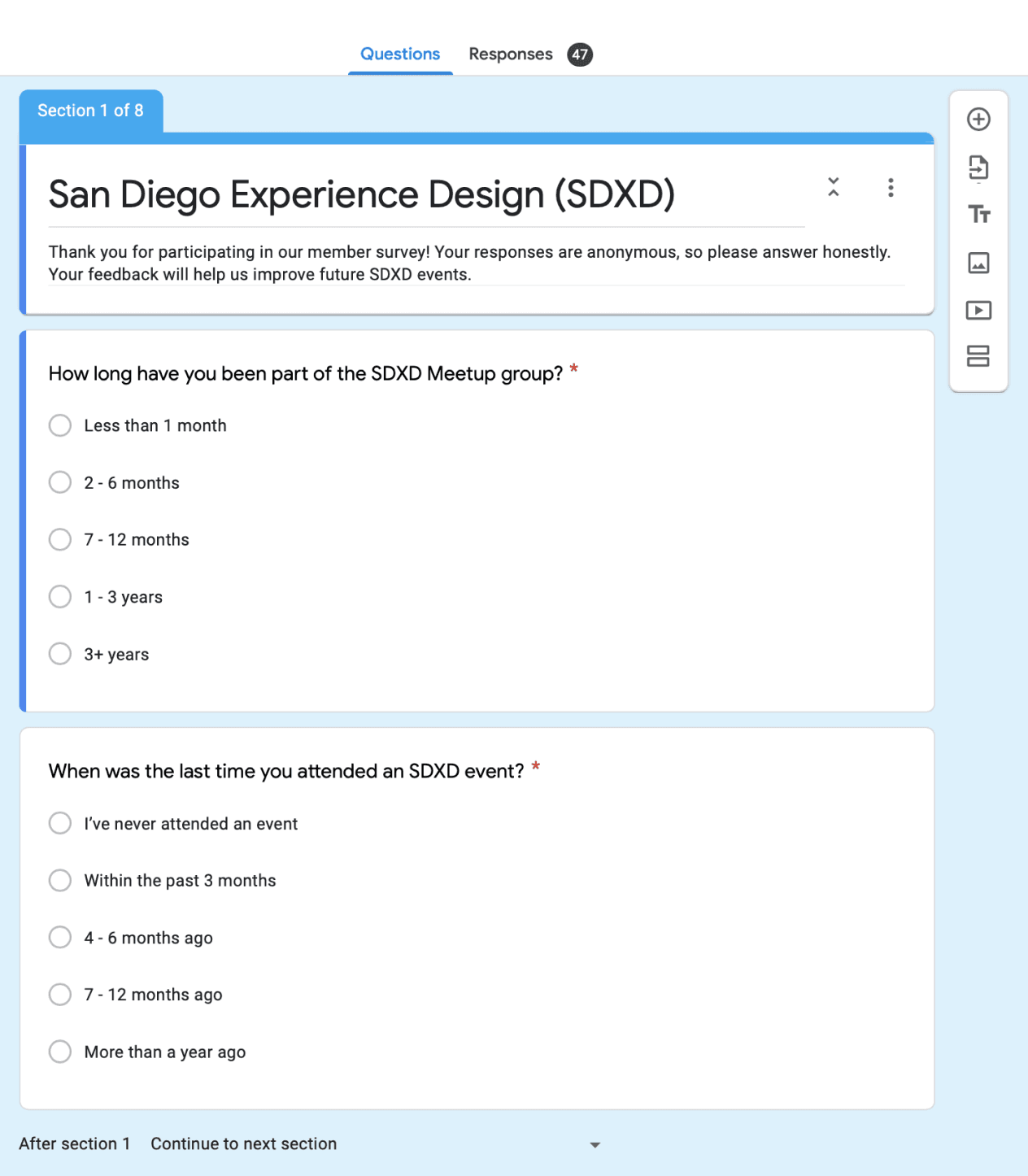
Member survey designed to capture feedback and identify community needs
Research-Driven Programming
Based on research insights, I redesigned our approach to events and content:
- Developed event formats aligned with identified member needs (portfolio reviews, mentorship sessions, skill workshops)
- Created content tracks for different experience levels (students, early career, senior practitioners)
- Introduced feedback loops to continuously improve programming
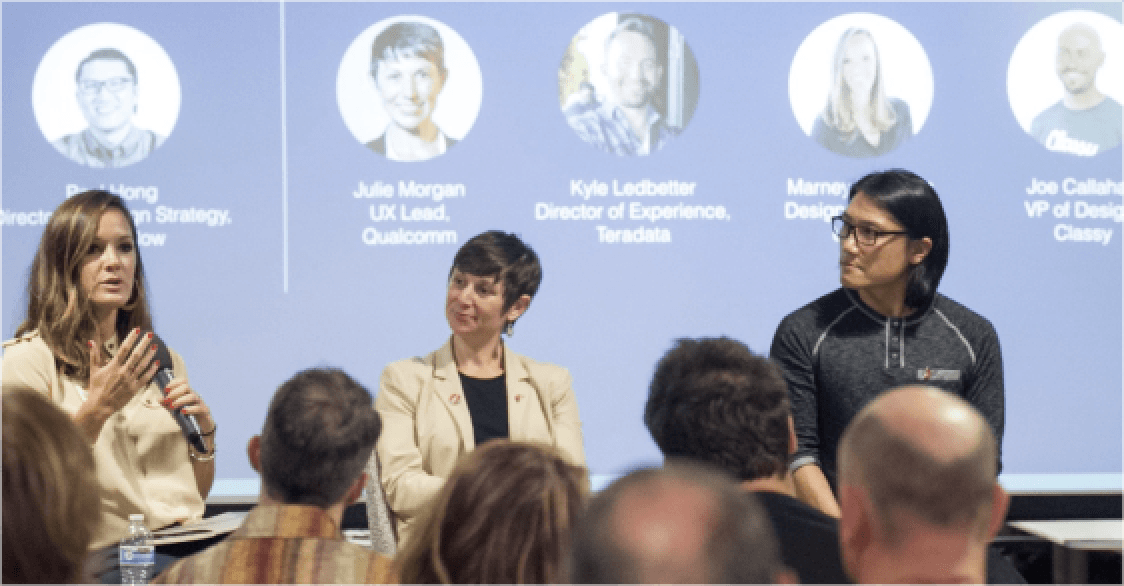
Community events featured industry speakers sharing insights with members
Consistent UX Research Touchpoints
I implemented regular research touchpoints to maintain engagement and continuously improve:
- Post-event surveys to gather immediate feedback
- Quarterly member check-ins to track satisfaction and evolving needs
- A/B testing of event formats and communication strategies
- Churn analysis to understand why members became inactive
Stakeholder Alignment
Partnered with product owners (other board members) to align business goals with user experience strategies:
- Presented research findings to the board to inform strategic decisions
- Advocated for member-centric approaches in all community initiatives
- Balanced sponsor/partner needs with member value
Key Deliverables
- Member research reports with actionable insights
- Community member personas and journey maps
- Redesigned event programming strategy
- Engagement tracking dashboard and KPIs
- Feedback collection and analysis framework
Results & Impact
Key Metrics
- 100% membership growth - from 2,500 to 5,000 members in 18 months
- Increased event attendance through research-driven programming
- Improved member retention via consistent UX research touchpoints
- Fostered positive learning environment that attracted new members through word-of-mouth
Skills Demonstrated
- Leadership: Board-level strategic decision making and cross-functional collaboration
- UX Research: Surveys, user interviews, persona development, journey mapping
- Data Analysis: Engagement metrics, churn analysis, A/B testing
- Stakeholder Management: Presenting to board, aligning diverse interests
- Community Building: Event programming, member engagement, retention strategies
Key Takeaway
This experience reinforced that UX research methodologies are universally applicable. The same principles I use in medical device human factors— understanding users, identifying needs, iterating based on feedback—drove measurable growth in a community context. It also developed my leadership skills in managing stakeholders and driving strategic initiatives.